Engine Glazing
At low temperatures, unburned fuel and oils accumulate on cylinder walls, preventing proper lubrication and shortening engine life.
Reduce your fuel costs by up to 80%, minimize maintenance requirements, and enjoy maximum reliability.
Generators are sized for peak loads; however, they spend 85–95% of their operating time at only 5–15% capacity.
At low temperatures, unburned fuel and oils accumulate on cylinder walls, preventing proper lubrication and shortening engine life.
A generator running 24/7 requires service every 500–1000 hours (approximately every 6 weeks).
Inefficient combustion means more harmful exhaust gases and continuous disturbing noise.
Engines operating at low load can become unstable, leading to voltage and frequency fluctuations.
In a hybrid system, the roles change. The inverter and battery bank provide uninterrupted power 24/7. The generator operates only when needed, running for a short time at its most efficient point to charge the batteries, then shuts down.
Instead of continuous low-load operation, short high-efficiency charging: see the difference at a glance.
24 hours at low load: continuous fuel waste and mechanical wear.
The generator runs at high efficiency for only 2 hours, with battery support for the remaining 22 hours.
Liters/Day - Continuous operation at low load (10%)
Liters/Day - Operating at high efficiency for only 2 hours
96 liters of fuel saved every day
Prime-load operation reduces glazing and extends TBO duration.
Since operating hours are reduced, service intervals are significantly extended.
The generator remains off for most of the day, preserving nighttime silence.
With inverter support, stable power without fluctuations is supplied for sensitive loads.
The generator power (kVA) must be greater than or equal to the inverter power. The most important rule.
The inverter must be capable of handling sudden peak loads on its own.
The battery bank must provide the C-Rate required to meet the inverter’s peak load demand.
In parallel systems, DC cable lengths and cross-sections must be exactly identical.
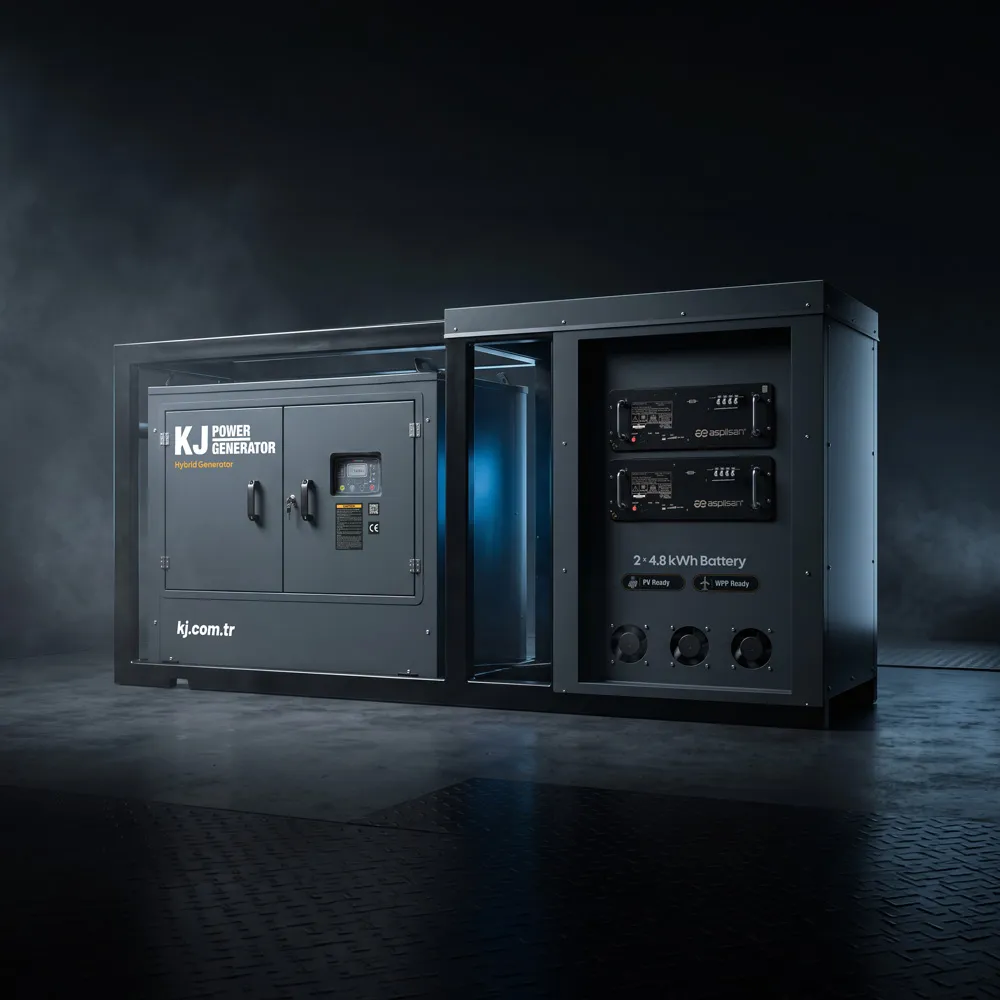
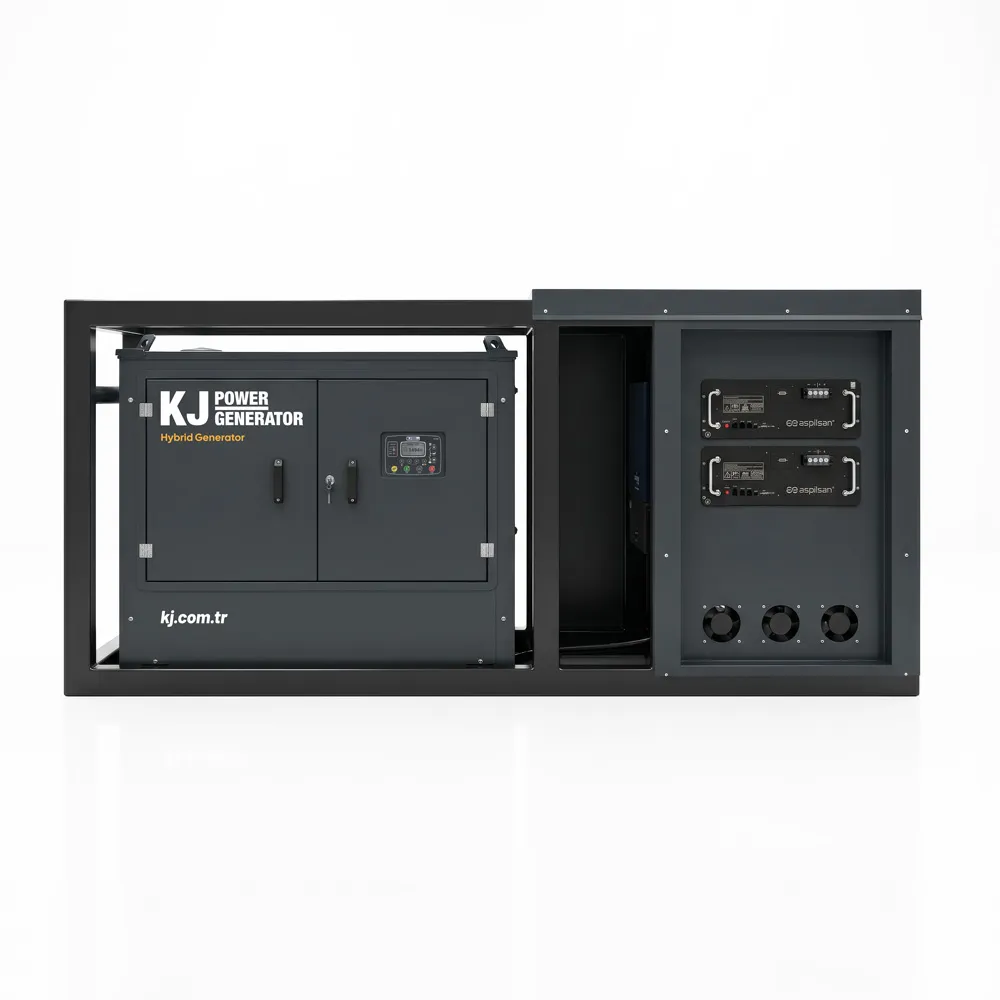
The system is modular. It can start with a single unit and easily be expanded up to massive systems of 75 kVA single-phase or 225 kVA three-phase.
Unlike generators, inverter-based three-phase systems can handle unbalanced loads between phases seamlessly. This is a major advantage in real-world applications.
Follow these logical steps to design the right system. It all starts with understanding the load.
Determine the customer’s total daily energy demand (kWh/day) and the highest instantaneous power demand that may occur simultaneously (kW peak). This is the most critical step.
Calculate the required usable energy amount according to the desired autonomy period (generator-free operating time). Divide by the depth of discharge (DoD) to find the capacity.
The inverter power must always be greater than the determined highest instantaneous power demand (kW peak). Take into account temperature-related power derating (20% safety margin).
Remote Management Portal
Put an end to the inefficiency and high costs of conventional generators. Step into operational excellence with hybrid technology.
A conventional diesel generator produces power whenever it is running. A hybrid generator system adds energy storage, power electronics and controls so the battery can supply the load for part of the time and the generator operates only when needed. This allows the system to respond differently to low loads, peaks and changing demand, while retaining generator support for longer-duration energy requirements.
Yes. A hybrid system can integrate solar generation when the inverter, battery, controls and protection scheme are designed for it. Solar energy can serve the load directly or charge the battery, while the generator provides support when solar production and stored energy are insufficient. The exact connection method and source priority depend on the system architecture.
Battery life is not a fixed number of years for every hybrid generator. It depends on battery chemistry, operating temperature, depth of discharge, charge/discharge rate, number of cycles and the battery-management strategy. Project design should use the battery manufacturer's cycle-life and calendar-life data for the expected operating profile, with allowance for gradual capacity degradation over time.
Hybrid generator cost depends on the generator rating, battery kWh capacity, inverter kW capacity, controls, enclosure, renewable integration, installation and required autonomy. A larger battery does not automatically provide the best economics. The useful comparison is total lifecycle cost: fuel, servicing, battery replacement assumptions, logistics and operating hours should be evaluated against the conventional generator baseline for the specific load profile.
Operating a diesel generator continuously at very low load can reduce combustion efficiency and prevent the engine from reaching its optimum operating temperature. This may increase fuel consumption and contribute to incomplete combustion, carbon deposits and unnecessary engine wear over time. In a hybrid generator system, battery storage can supply smaller loads while the generator remains off. When the generator is required, it can operate for shorter periods at a more efficient load level to supply demand and recharge the batteries, helping reduce prolonged low-load operation.
Battery autonomy is calculated by evaluating the site's energy consumption, expected load profile and the required generator-free operating period. Daily or hourly energy demand in kWh is considered together with the battery's usable depth of discharge, inverter efficiency, reserve capacity and environmental operating conditions. Peak power demand should also be evaluated separately because battery energy capacity and inverter output determine different aspects of system performance. Accurate battery sizing therefore requires both the total amount of energy consumed over time and the highest instantaneous power demand to be considered.
Yes. Hybrid generator systems can be designed with a modular architecture so capacity can be expanded as the site's energy requirements increase. Depending on the system configuration, additional inverter capacity, battery storage or parallel units can be incorporated into the installation. This modular approach can make it easier to adapt the power system to changing load requirements or future expansion. Any capacity increase should still be evaluated for electrical compatibility, battery configuration, cabling, protection settings and control-system limits before additional equipment is connected.
No. One of the main operating principles of a hybrid generator system is to avoid running the generator continuously when it is not necessary. During periods of low or moderate demand, the battery and inverter can supply the connected loads while the generator remains off. When the battery state of charge reaches a defined threshold, the load increases or additional charging is required, the generator can start automatically. It can then operate at a more appropriate load level, supply the site and recharge the batteries before shutting down again according to the system's control strategy.
Inverter-based hybrid systems can provide greater flexibility when supplying three-phase installations where the electrical demand is not distributed equally between phases. Depending on the inverter architecture, the power electronics can manage phase loads more independently than a conventional generator supplying the load directly. This can help provide stable power in applications where phase consumption varies. However, the allowable phase imbalance, inverter limits, neutral current, connected equipment and overall electrical configuration should still be checked during system design to ensure safe and reliable operation.
Fuel savings can be evaluated by comparing the hybrid system's actual generator runtime and fuel consumption with the operating profile of a conventional generator serving the same load. Monitoring and reporting systems can record generator operating hours, battery charge and discharge data, energy flows and other system-performance information over daily, weekly or longer periods. For a meaningful comparison, the same load profile and operating conditions should be used as the baseline. This makes it possible to measure how reduced generator runtime affects fuel consumption and overall operating efficiency.
By subscribing to our newsletter, you'll be the first to receive information about our new products, promotions, and industry developments. By subscribing, you acknowledge that you have read and accepted the Personal Data Protection Law (KVKK)

KJ Power is a well-established diesel generator manufacturer operating in the energy sector since 1996. The company, which produces a wide range of diesel generator sets from 10 kVA to 5000 kVA, has international ISO 9001:2015 and other important certificates. As a generator company, it provides special generators for projects by offering special engineering solutions. Serving many sectors in Turkey, KJ Power has proven its global success as a generator manufacturer by exporting 90% of its production to more than 120 countries.

