Diesel Generator Sets
KJ Power offers uninterrupted energy solutions with high-performance, cost-effective, and reliable diesel generator models ranging from 10 kVA to 5000 kVA, available in both canopy and open type configurations. With 24/7 technical service support and a strong global export network, KJ Power provides confidence and reliability to its customers. Its generators deliver high efficiency, low operating costs, and long-lasting performance, offering professional solutions for industrial and commercial needs.
With a robust engine structure and durable design, KJ Power generators provide a reliable power source and are an ideal choice for meeting the energy demands of various industries.





Loading generators
We are preparing the right generators for you, please wait...
Diesel Generator Models and Industrial Power Solutions
Diesel generators are highly effective tools that meet the electrical needs of homes, businesses, and schools. Under the KJ Power brand, we manufacture diesel generator sets ranging from 10 kVA to 5000 kVA, available in both enclosed and open designs to serve as reliable backup power.
Our products provide solutions for many industries, including industrial, transportation, healthcare, finance, construction, telecommunications, oil, public services, and defense. Our range of diesel generators stands out for their power, durability, and high-quality features, whether you need a compact single phase unit or a massive industrial plant.
Diesel generators deliver uninterrupted energy and superior performance, effectively meeting energy demands. Our generators, equipped with next-generation features, offer an efficient usage experience. During power outages, these generators protect your electronic devices and machinery by acting as an immediate backup power source.
Converting mechanical energy from diesel fuel into electrical energy, generators are indispensable for industrial facilities and residential areas. Generators equipped with overload protection allow you to safely operate your devices, highlighting the critical importance of selecting a continuous power source for essential equipment, especially when evaluating your prime power requirements.
When selecting a generator, the region of use plays a crucial role in determining the correct power capacity, and different generator sizes are required depending on the scale of your facility and the size of the devices connected.
Generator power varies by model, making it essential to choose the right one. Selecting the appropriate generator sizes from our range will increase energy efficiency, and these generators, which provide uninterrupted power, ensure your safety in emergencies.
The performance of generators is evaluated based on their horsepower and output ratings, such as finding the exact kw diesel generator that matches your operational load. With a wide range of power values, our generators offer the most suitable solution for your needs.
Accurately determining the required power is fundamental when choosing a generator, and generator prices vary depending on the features of the selected model. Additionally, understanding the difference between prime power and standby power ratings is vital; the use of dual power sources in the design of hybrid models offers flexibility and greater efficiency for various applications.
Diesel generator models are commonly used in areas where power outages occur frequently, making dependable standby power a necessity. Moreover, diesel fuel is an economical and practical choice. Diesel generators, which reduce the risk of damage to devices during power outages, provide high-quality and stable current, ensuring a reliable power source.
These generators, designed specifically for areas with frequent and irregular power outages, are produced in various generator sizes to meet all energy needs. With our range of models, we respond to different needs by offering users a continuous and reliable energy source solution.
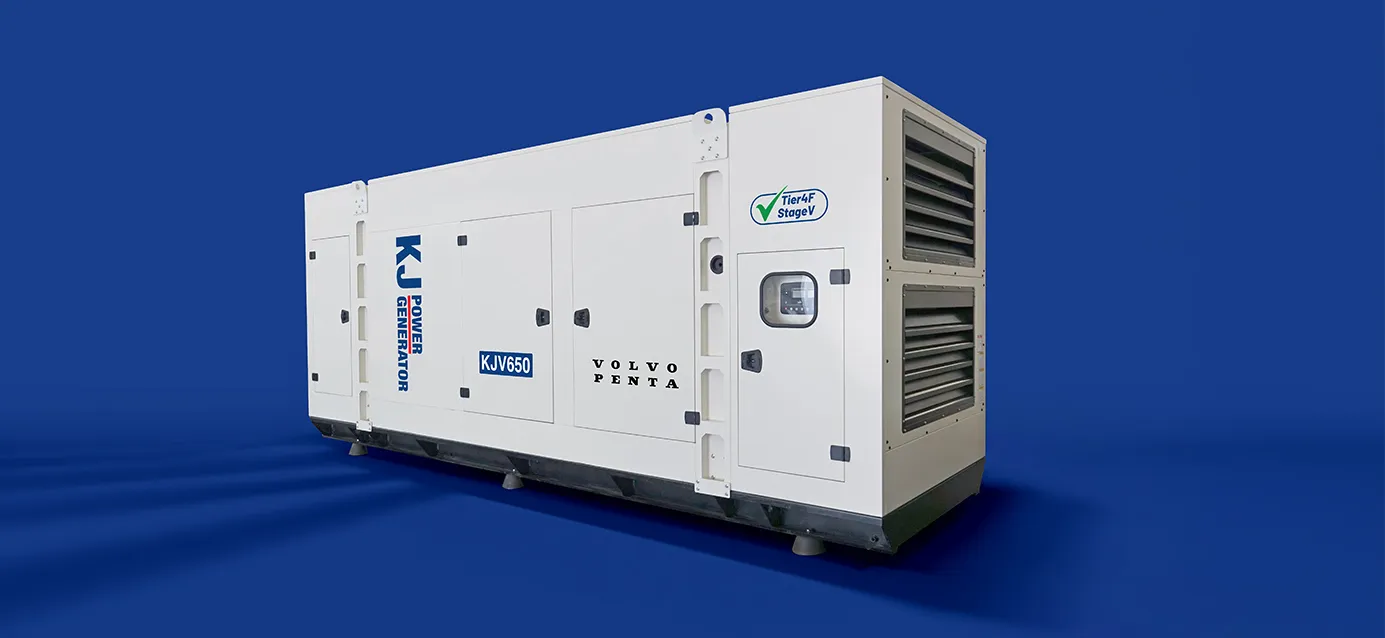
KJ Power Diesel Generator Models
Uninterrupted power, high performance, low operating costs, and long-lasting diesel generators. At KJ Power, we produce over 170 different generator models, helping you find the ideal kva generator for any application.
Our generator models, designed to meet the demands of your special projects, are meticulously manufactured in our own facilities. With our Generator Project Support Services, we ensure that generator systems operate at maximum efficiency at every stage of your projects, whether configured for continuous prime power or emergency use.
Taking into account customer needs and project details, our expert engineering team carefully manages all processes. Diesel generator prices are related to the variety of models and features of the product, including whether you require a heavy-duty three-phase or a residential single phase setup.
Diesel generator models automatically activate as soon as the power goes out, helping you manage potential crises more easily with dependable standby power. Diesel generators are designed to operate continuously. These generators are suitable for use in large-scale areas.
They are designed to provide comfortable use in places where power outages are frequent. For longer usage demands, we also design special production fuel tanks, offering custom solutions to meet your needs. Additionally, our specially designed and developed products operate quietly, thanks to low noise levels.
Diesel Generator Features
Generators are among the indispensable energy sources of modern life. These devices help reduce risks during power outages. They have different power capacities and operating times. When the power goes out, life comes to a halt, but generators kick in to prevent downtime and ensure life continues with seamless backup power.
Generators help keep your work going until the electricity returns, providing solutions in critical moments by delivering the exact kw diesel generator output your facility requires.
Power and Performance Qualities:
We offer power options in various kVA ranges to meet your demands, ensuring that every kva generator we produce delivers uninterrupted energy supply for top-level performance. They are equipped with powerful energy connections to support high-speed operations. Thanks to sound insulation, they operate extremely quietly.
Durability and Design Qualities:
They feature a specially designed cabinet structure that is resistant to harsh weather conditions. They are equipped with special louver designs that optimize airflow. The cabinet and chassis are produced with a special design to enhance durability. Their easily mountable and demountable structure provides a user-friendly experience.
Fuel and Energy Management Qualities:
The fuel tank capacity can be tailored to your needs. In traditional models, there is a large fuel tank capacity that provides up to 40 hours of endurance. Even in the most demanding working conditions, they offer long maintenance intervals. A remote monitoring system enables quick maintenance and intervention.
Diesel Generator Engine Brands and kVA Power Ranges
As KJ Power Generator, the engine brands and kVA ranges we use are as follows, allowing you to select the perfect kva generator powered by world-renowned engines.
- Volvo Penta: 165 kVA to 880 kVA diesel-fueled options.
- Cummins: 28 kVA to 3750 kVA diesel-fueled models.
- Perkins: 10 kVA to 2500 kVA diesel-fueled power options.
- Baudouin: 25 kVA to 2750 kVA diesel-fueled.
- Hyundai Doosan: 220 kVA to 1000 kVA canopied and open models.
- SDEC: 76 kVA to 1100 kVA diesel canopied and open models.
- Yanmar: 13 kVA to 63 kVA diesel model range.
- John Deere: 66 kVA to 275 kVA canopied and open models.
Diesel Generator Prices
There are many functions that affect the price of a diesel generator. As the generator company KJ Power, we have generator models with different engine brands.
The prices of the product vary depending on the technology and technical specifications used in its production. Its functions, dimensions, and whether you choose a high-capacity kw diesel generator or a smaller single phase model also affect the price.
Among the options, there are affordable generator models as well as generator models offered at higher prices.
Diesel Generator Frequently Asked Questions
kW is the real power available to do useful work, while kVA is the apparent power that combines real and reactive power. The relationship depends on the load power factor. Generator nameplates often show both values, and the correct selection should be based on the real load, power factor, motor starting requirements and the manufacturer's rated output rather than converting kVA to kW with an assumed factor in every project.
Single-phase generators supply single-phase loads and are typically considered where the connected equipment is primarily single-phase. Three-phase generators are used for three-phase distribution systems, industrial motors and larger commercial or industrial loads. The choice should follow the site's electrical architecture. On three-phase sets, single-phase loads also need to be distributed carefully to avoid excessive phase imbalance.
No. A diesel generator can be operated with manual transfer equipment, but an ATS is normally used when automatic backup operation is required. The ATS monitors the normal source, transfers the load to the generator after the generator reaches acceptable voltage and frequency, and returns the load when the normal supply is stable again. The transfer equipment must be sized and coordinated with the site's protection scheme.
Service intervals depend on the engine model, operating hours, calendar time, load profile, fuel quality and environmental conditions. The correct interval is the one stated in the engine and generator maintenance documentation. Standby generators also need periodic inspection and test running even when they accumulate few operating hours, because batteries, fluids, filters, fuel systems and transfer equipment can deteriorate while the unit is idle.
Yes. Multiple generator sets can operate in parallel when the system includes compatible controls, synchronizing equipment, protection and load-sharing logic. Voltage, frequency and phase must be matched before connection, after which the control system distributes active and reactive load between sets. Parallel operation is commonly used for redundancy, capacity expansion or better load matching, but it requires an engineered switchgear and protection design rather than simply connecting generator outputs together.
Higher altitude and high ambient temperature can reduce generator output because the engine receives less dense air and the cooling system has less margin to reject heat. Alternators can also have temperature- and altitude-related derating limits. The amount of derating is model-specific, so project sizing should use the engine and alternator manufacturers' published correction factors for the actual site elevation, temperature and ventilation conditions.
There is no single noise level for all diesel generators. Sound pressure depends on engine size, load, cooling airflow, exhaust system, enclosure design, measurement distance and the acoustic characteristics of the site. A sound-attenuated canopy can reduce radiated noise, but the required project limit should be compared with the specific model's tested acoustic data and the site's boundary or occupational-noise requirements.
When buying a diesel generator, it is essential to first clearly determine your purpose of use.
To get the highest efficiency from the generator, it is crucial to choose the model that best suits your needs. We manufacture many diesel generator models with different equipment and features.
Therefore, you should choose the model that best fits the area of use. Finalizing where you will use the generator makes it easier to make the right choice.
Additionally, technical details and the device's functions are critical factors to consider.
Generators are used in many areas such as industrial facilities, factories, and transportation. These generators can have different features.
Healthcare services, financial institutions, and construction projects also use generators. Telecommunications, the oil industry, and public services also need generators. The defense industry and data centers also use generators.
The needs of each area are different. Therefore, the features of the generators also vary.
When buying a diesel generator, it is important to pay attention to maintenance, spare parts, warranty, and after-sales services. Contact us for detailed information.
The ease of maintenance and spare part accessibility of the generator you will purchase is an important factor. Considering maintenance needs and the availability of spare parts simplifies your work in the long run. The generator's warranty period and the after-sales support offered by the manufacturer or seller should influence your purchase decision. A solid warranty and a fast service network ensure that potential failures are resolved quickly.
A diesel generator works through the interaction of a diesel engine and an alternator. Diesel fuel is delivered to the engine via the tank, and the engine compresses the air-fuel mixture to create an explosion. This explosion moves the pistons, and this movement is transferred to the crankshaft. The crankshaft turns the alternator, converting mechanical energy into electrical energy.
The alternator generates an electric current by creating a magnetic field. The generated electricity is monitored and managed through the control panel. Diesel generators are equipped with systems that expel exhaust gases and cool the engine. Thanks to their high efficiency and durability, they are used as reliable energy sources. Contact us for detailed information about uninterruptible power supply diesel generator sets.
The operating time and fuel consumption of diesel generators vary depending on many factors. The operating time depends on the generator's load status, the capacity of the fuel tank, and the generator type. A generator operating under a low load can run for a longer time, while this time is shorter under a high load.
Fuel capacity is an important factor. Generators with large fuel tanks can operate longer without refueling. The operating times of different diesel generator models also vary; industrial models can generally run for longer periods. Contact us for detailed information about uninterruptible power supply diesel generator sets.
Fuel consumption, on the other hand, depends on the power produced by the generator, its efficiency, and operating conditions. Generators that produce more power consume more fuel. Depending on the generator's design, more efficient models can use less fuel for the same power output. Additionally, environmental conditions such as temperature can also affect fuel consumption.


