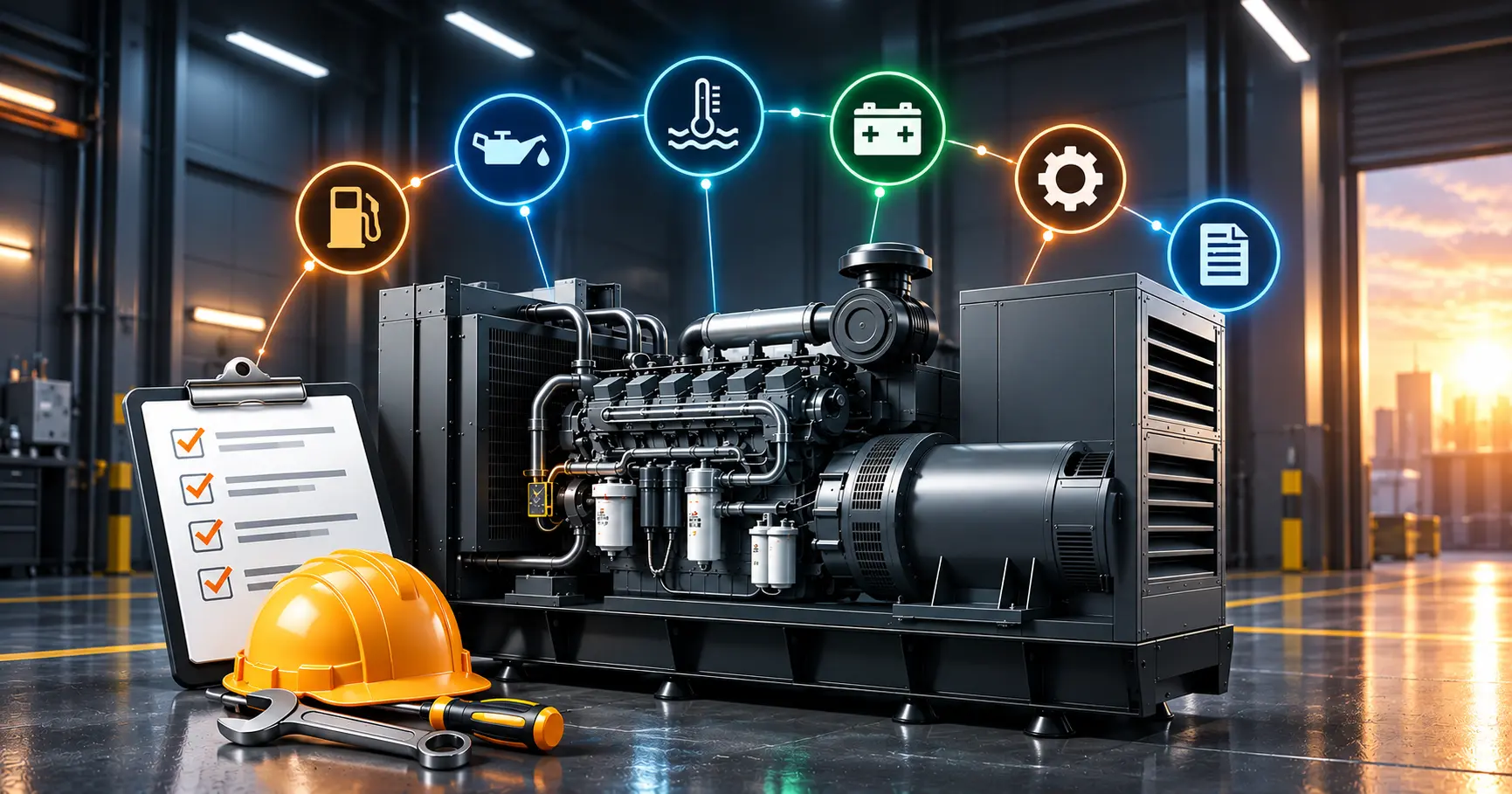
For generator systems to operate safely, efficiently and reliably over a long service life, the commissioning process must be carried out in a controlled manner. Before the first start of a newly installed, recently serviced or long-unused generator, the engine, alternator, battery, fuel system, cooling system, exhaust system and electrical connections should be thoroughly inspected. Generator pre-start checks help identify potential problems at an early stage and verify that the equipment is ready to operate under safe conditions. Therefore, the points to consider before the first start of a generator are not limited to checking whether the unit operates; mechanical, electrical and environmental conditions must be evaluated as a whole. At KJ Power Generator, we consider proper generator commissioning essential for equipment performance and operational safety.
What Is Generator First Start and Why Is It Important?
Generator first commissioning is the technical process of verifying that a generator set operates in accordance with the manufacturer's requirements and project specifications after installation has been completed. First start checks cover many areas, from mechanical components and electrical connections to fluid levels and operating parameters. An improperly performed first start may cause faults in the engine, alternator or auxiliary systems, as well as performance losses or safety risks. Therefore, the checks required before starting a generator should be carried out systematically and the manufacturer's operating, installation and commissioning instructions should be followed. A generator first start checklist helps ensure that all checks are completed in a defined sequence and according to consistent standards.
What Should Be Checked on the Engine and Alternator Before the First Start?
The engine and alternator inspection performed before the first start includes evaluating the physical and mechanical condition of the main components of the generator set. The engine and alternator should be inspected for possible damage caused during transportation or installation, loose connections, fluid leaks, foreign objects and the general condition of connection points and fasteners. Alternator connections, protective components and any elements that may obstruct airflow should also be checked. This general generator inspection helps determine whether the system is suitable for commissioning. Adopting regular generator maintenance checks from the initial commissioning stage contributes to maintaining equipment reliability throughout its service life.
How Should Engine Oil, Cooling System and Belts Be Checked?
For reliable engine operation, generator engine oil should be checked according to the procedures and level requirements specified by the manufacturer. In addition to the oil level, possible leaks and the general condition of the oil should also be evaluated. The generator coolant, antifreeze and radiator should be inspected to ensure that the cooling system is filled to the appropriate level and is free from leaks. Hoses, connection points and the area around the radiator should be visually inspected. The tension and physical condition of belts used for the fan and auxiliary systems should also be checked. Cracked, loose or worn components should be replaced before the first start.
What Should Be Considered When Checking the Battery and Electrical Connections?
Generator battery inspection is one of the important stages of initial commissioning to ensure reliable operation of the starting system. The general condition and charge level of the battery, battery terminals and generator battery connections should be checked for looseness, oxidation or physical damage. Generator cable connections at the control panel, alternator, chassis and other electrical components should also be inspected by qualified personnel. Loose or faulty electrical connections may cause overheating, voltage irregularities, equipment damage and safety risks during operation. For this reason, particular attention should be paid to the electrical system during pre-start checks.
How Should the Generator Installation Area Be Prepared for the First Start?
A safe first start depends not only on the technical condition of the generator set but also on the suitability of the installation area. Materials that could obstruct air intake or discharge should not be present around the generator, and sufficient access should be maintained for service and maintenance operations. Particularly in indoor installations, generator ventilation must comply with project requirements and the manufacturer's specifications. Flammable materials, unsuitable stored items and other elements that could compromise operational safety should be removed from the generator area. The installation surface, equipment mounting, environmental conditions and required safety clearances should also be evaluated as part of the generator first start inspection. Generator canopies used in open or enclosed systems should also be checked in terms of airflow, service accessibility and installation conditions.
How Should the Exhaust, Ventilation and Fuel Systems Be Checked?
Before the first start, the generator exhaust system should be checked to ensure that all connections have been correctly installed, exhaust gases are safely discharged outdoors and there is no visible damage or irregularity in the system. During the exhaust system inspection, connection points and any flammable materials around the exhaust line should also be considered. Air intake and discharge openings must remain unobstructed, and generator ventilation must provide sufficient airflow for the engine and radiator. During the generator fuel inspection, it should be confirmed that the correct fuel is available, there are no visible leaks in the fuel line and the system complies with the manufacturer's instructions. Particularly in diesel generator systems, the fuel supply line and connection points should be carefully inspected before the first start. If any leakage is detected in the fuel or exhaust system, the generator should not be started and technical support should be requested.
What Checks Should Be Performed After Starting the Generator?
Post-start checks performed after commissioning help verify that the system is operating safely and steadily. Warnings and operating values on the control panel should be monitored, and the generator should be inspected for unusual noise, vibration, odour, smoke or fluid leakage. Generator oil pressure should be monitored to evaluate the correct operation of the lubrication system, while engine temperature should be checked to assess cooling system performance. Generator frequency and engine speed should also be evaluated according to the nominal values specified by the manufacturer for the relevant generator set. In this way, it can be confirmed not only that the generator is running, but also that it has been commissioned under correct and safe operating conditions.
Which Safety Rules Should Be Followed During the First Start?
Generator safety rules must be followed throughout every stage of initial commissioning. Access to the work area should be restricted to authorised personnel, moving and hot components should not be touched, and electrical connections should only be handled by personnel with the required technical qualifications. A system with fuel or oil leakage should not be started, and adequate ventilation and safe exhaust gas discharge must be ensured in enclosed areas. Personal protective equipment specified by the manufacturer should also be used and all generator safety requirements should be observed. Verifying that the emergency stop system is accessible and operational is another important element of first start safety.
Why Should Initial Commissioning Be Performed by an Expert Technical Service Team?
Generator sets are complex power systems in which mechanical, electrical and electronic components operate together. Therefore, generator commissioning should not be considered simply as starting the unit. A technical service inspection performed by professional generator service teams includes evaluating mechanical systems, electrical connections, the control panel, safety functions and key operating parameters. The generator commissioning service provided by KJ Power Generator is intended to ensure that the generator set is commissioned under appropriate conditions and that potential irregularities are identified before operation. Professional inspections carried out as part of KJ Power Generator's generator after-sales services contribute to equipment reliability and operational continuity.


