Our Telecommunications References
Organizations featured among KJ Power Generator’s telecommunications infrastructure references in Türkiye and other countries.





Our Products for the Telecommunications Industry
KJ Power energy solutions for base stations, remote sites and multi-site telecommunications networks across different operating scenarios.
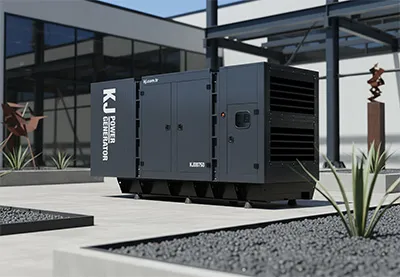
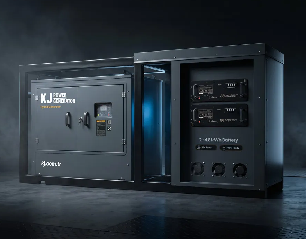
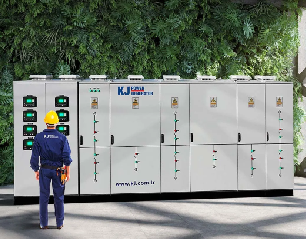
Power Systems for Telecommunications and Base Stations
Power Requirements for Uninterrupted Telecommunications
Uninterrupted telecommunications depend on the power supply not only for active communication equipment but also for its operating environment. Radio equipment, transmission systems, network control units and required cooling systems must be assessed together. The service impact of a power failure varies according to the site’s role within the network. Backup power priorities should therefore reflect service-critical functions, not merely site consumption. Monitoring power sources and forwarding fault alerts to the responsible team are important inputs for intervention planning. Clearly defining the roles of generators, batteries and the grid makes outage scenarios easier to manage. Communications continuity requires more than producing electricity: the right power must reach the right equipment at the right time.
Power Solutions for Base Stations and Remote Sites
At base stations and remote sites, practical constraints such as limited space and maintenance access must inform the choice of power solution. Road access, seasonal travel restrictions and staff availability affect refueling and service planning. Generator runtime targets should be based not only on tank capacity but also on consumption at actual load, usable fuel volume and the refueling process. Battery backup capacity is also part of this plan. Even at low-consumption sites, initial startup and battery charging loads can influence sizing. Enclosure placement, airflow and measures against unauthorized access must also be considered. A suitable remote-site solution does not disregard maintenance; it provides a monitorable, sustainable operating arrangement despite access restrictions.
Reliable Backup Power Infrastructure for Grid Outages
For telecom backup power infrastructure, the transfer sequence between energy sources must be compatible with the site’s battery and rectifier configuration. Battery support during grid loss, generator startup and restoration of rectifier power should be planned as one process. While supplying communications equipment, the generator may also need to meet battery charging demand. Average consumption before an outage may therefore be insufficient for sizing. In areas with frequent outages, repeated start-stop cycles and grid-return conditions require separate consideration. Monitoring fuel levels, battery condition and system alarms helps prioritize field intervention. Backup power adequacy should be assessed across the entire transfer sequence rather than by the capacity of a single source.
Generator Selection for Variable Load Profiles
Power demand at telecom sites may vary with installed radio equipment, traffic, cooling requirements and battery charge status. Adding equipment or sharing a site between operators can also change its load profile. Generator selection should account for these changes using measured consumption and planned expansion. Rectifier input behavior, power factor and auxiliary equipment starting simultaneously must be included in the capacity assessment. An oversized generator operating at low load for extended periods must be evaluated against the engine manufacturer’s operating requirements. Conversely, sizing only for minimum demand may fail to accommodate charging and cooling loads. Proper sizing requires a load analysis covering different operating states and verified against manufacturer data.
Fuel Efficiency and Operational Continuity with Hybrid Energy Systems
Hybrid telecom power systems can coordinate generators, batteries, solar power and the grid where the project permits. The objective is to use each source according to prevailing conditions and reduce unnecessary generator runtime. Fuel savings cannot be assumed as a fixed percentage: solar irradiation, telecom load, battery capacity, charging limits and control strategy all affect results. Batteries should not be subjected to unsuitable charging cycles, and generators must operate within manufacturer specifications. System behavior under different weather conditions and prolonged outages must also be assessed. A hybrid architecture is not simply the addition of another power source; it is the engineered allocation of duties between sources. Equipment compatibility and management functions must be verified for the selected configuration.
System Design for Harsh Environmental Conditions at Telecom Sites
Environmental design at telecom sites should reflect local temperature, humidity, dust, rainfall and altitude. An enclosed housing may protect equipment from external exposure but can increase internal temperatures without sufficient airflow. Protection and cooling must therefore be considered together. Coastal corrosion risks and manufacturer data on engine and cooling performance at high altitudes should be examined. Flooding risks, cable entries, connection protection and site grounding are also part of the design. Lightning and surge protection must be addressed by qualified teams in line with the overall electrical design. Environmental resilience should be defined through verified site-specific requirements, not one universal feature for every telecom location.
Scalable Energy Solutions for Multi-Site Telecom Projects
Scalability in multi-site telecom projects requires more than installing the same generator everywhere. Sites can be grouped by load, grid access, environmental conditions and maintenance accessibility. Common technical specifications for each group can improve consistency in selection and acceptance, while installation and connection requirements still need checking at each location. Assessment methods for adding sites or increasing existing capacity should be defined in advance. Keeping technical documents, equipment records and maintenance information organized simplifies operation of a growing network. Where centralized monitoring is needed, the necessary communication interfaces must be confirmed in the selected hardware. This approach supports controlled expansion without overlooking differences between sites.
KJ Power Generator and Energy Systems for Telecom Projects
When evaluating KJ Power Generator solutions for telecom projects, the site’s grid conditions and the generator’s role in the power chain should be established at the outset. Diesel generator selection and project-specific engineering can be assessed in relation to communications loads, battery charging demand and maintenance access. A fixed base station, a remote relay point and an expanding network of sites have different technical priorities. Where existing rectifiers or energy management infrastructure must be integrated, control and communication requirements should be specified. Remote monitoring, hybrid operation and specialized environmental equipment should not be assumed to be standard features; suitability must be confirmed for the chosen configuration. This defines the solution around actual site power and operating needs rather than a generic telecom package.
KJ Power’s Engineering Approach to Telecommunications Infrastructure
Engineering assessments for telecom infrastructure benefit from understanding actual site consumption and outage history. Measured loads, existing battery condition, generator operating logs and maintenance accessibility provide key inputs. Technical work with KJ Power Generator should consider these data alongside the objectives of a new installation or system upgrade. At sites with frequent capacity changes, original design assumptions must be checked for continued relevance. Clearly defined connection and control interfaces support compatibility between equipment from different suppliers. Reviewing consumption and runtime records during operation reveals differences between planned scenarios and actual use. This approach considers both initial equipment selection and changing power needs over the life of the communications infrastructure.
Power System Applications for Telecommunications Infrastructure
Telecom power requirements vary with grid access, load profile, site location, environmental conditions and maintenance accessibility. Each power system should be evaluated against the actual operating conditions of its application.
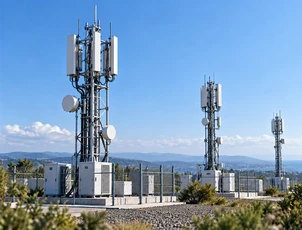
Backup power solutions compatible with battery and generator operating scenarios to support communications loads during grid outages.
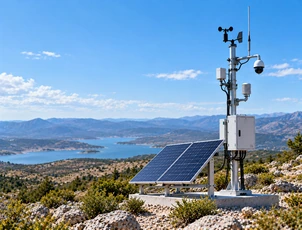
Site solutions supporting monitorable and sustainable power operations where transport, refueling and maintenance access are limited.

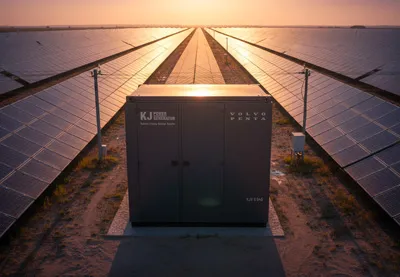
Hybrid energy architectures coordinating generators, batteries, grid supply and, where appropriate, renewable energy sources.
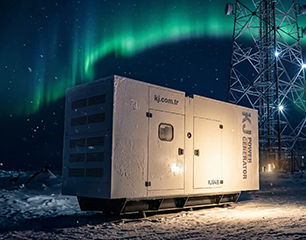
Solutions supporting the management of multiple sites with differing loads, grid access and environmental conditions through common technical principles and controlled scaling.


