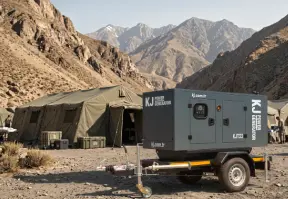
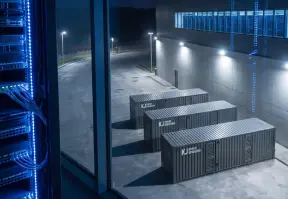

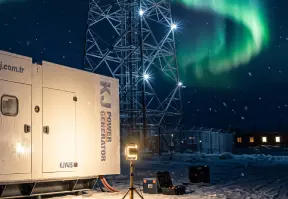
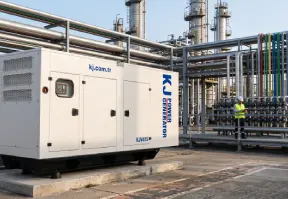
Energy requirements vary according to a business's field of activity, operating structure and tolerance for power outages. While continuity of processes may be the primary concern for a manufacturing facility, supplying critical equipment is essential in healthcare services, while maintaining connectivity may be the determining factor in telecommunications. For this reason, industry-specific generator solutions should not be considered merely as equipment selected to meet installed power requirements. The activities that may be affected by an outage, the loads that should receive priority support and how the energy source will operate with the existing infrastructure should all be evaluated together. Unplanned downtime may result in workflow disruptions, data loss, product loss or reduced service quality. Generator systems form part of this planning by producing energy in areas where grid power is unavailable or by supplying designated loads during an outage. KJ Power Generator offers an approach that evaluates diesel generators and project-specific engineering solutions together with the operating conditions of each industry. This allows power requirements to be assessed not only according to current consumption but also in terms of business continuity objectives and future changes.
Industries Served by KJ Power
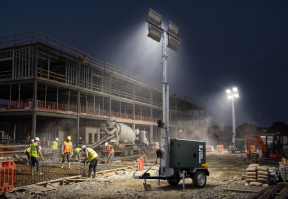
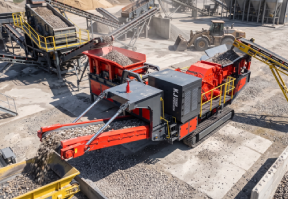
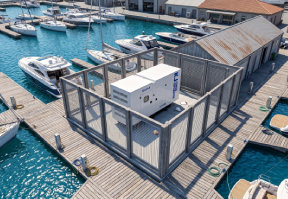
KJ Power Generator's industry-specific solution areas cover a wide range of operating environments, including the defense industry, data centers, healthcare facilities, telecommunications infrastructure, industrial businesses, construction sites, mining and tourism. Although reliable energy is a common requirement across all these areas, their priorities differ. In data centers, the availability of IT infrastructure is essential; in factories, maintaining production flow is important; and on construction sites, energy must be delivered to changing work locations. In hotels, guest comfort and technical operating requirements must be considered together, while access and fuel supply become key factors at remote mining and telecommunications sites. Industry-specific generator selection makes these differences visible. Since two facilities with the same power rating may have different load behaviors and operating expectations, the solution should be shaped according to the actual conditions of the application rather than solely according to the name of the industry.
Our Approach to Power Solutions for Different Industries
Our approach to power solutions for different industries begins with determining the purpose for which the generator will be used. A standby power system that operates during grid outages cannot be selected using the same operating assumptions as a system intended to serve as the primary source of electricity. Continuous load consumption, starting behavior, the possibility of loads being activated simultaneously and the acceptable interruption duration are then examined. The requirements of motor-driven equipment and electronic loads are evaluated separately to establish the required capacity, control and distribution structure. Ambient temperature, altitude and installation conditions complete this assessment. The objective is not to select an unnecessarily oversized unit, but to define a power system suited to the actual operating scenario. This approach facilitates converting energy requirements into a technical specification and comparing different alternatives using consistent criteria.
Discover the Industry-Specific Solution That Meets Your Needs
The starting point for determining the right industry-specific solution is to clearly define which activities must continue during a power outage. Supplying an entire facility and supporting only critical loads require different investment and operating decisions. Existing electrical projects, equipment lists, consumption records and planned capacity increases help clarify this distinction. For newly established facilities, design loads should be evaluated together with actual operating scenarios. The generator installation area, fuel supply possibilities and maintenance access should also be included in the selection process. Sharing this information during a technical evaluation with KJ Power Generator supports the transition from general industry requirements to project-specific needs. In this way, the search for a solution is conducted not merely around a model or power rating, but around an integrated system capable of meeting the priorities of the business.
A Single-Source Solution for Changing Energy Requirements Across Industries
Evaluating changing energy requirements across industries from a single source requires the generator set and the surrounding infrastructure to be considered as an integrated system rather than independent components. Electrical distribution, automatic transfer arrangements, ventilation, exhaust discharge and fuel supply should all serve the same operating scenario. For example, even a generator with sufficient capacity may fail to deliver the expected result because of unsuitable installation conditions or poorly defined load priorities. A holistic approach helps clarify the connections between different disciplines at the beginning of the project. The responsibilities of mechanical and electrical teams, connection boundaries and acceptance criteria should be defined within a common framework. This coordination approach helps reduce incompatibilities that may otherwise emerge later and supports consistent decision-making during implementation. From an operational perspective, the objective is not merely a single piece of equipment, but an energy infrastructure whose components can work together.
Solution Capability Ranging from Standard Products to Custom Projects
A standard generator set can provide a suitable starting point when project conditions fall within the defined operating limits of the product. However, limited installation space, changing power demand, specific noise requirements or the need to operate together with an existing facility may require different arrangements. At this stage, a custom-project approach focuses on identifying modifications that meet the actual requirement rather than adding unnecessary features. Canopy configuration, control scenarios, multi-generator operation and connection arrangements are evaluated according to the application. The impact of each customization on cooling, service access and electrical compatibility should also be examined. KJ Power Generator's project-specific engineering solutions provide a framework for evaluating these requirements. The final configuration should be defined based on the technical data of the selected equipment and the project requirements that have been verified.
KJ Power in Engineering, Manufacturing and System Integration
Throughout the process of developing a power system from engineering and manufacturing through to facility integration, it is important that design decisions are transferred consistently between stages. Engine and alternator selection, control arrangements, mechanical layout and electrical connections are interconnected elements. The operating conditions defined in the project should be reflected in equipment selection, the manufacturing scope should be clearly established and connection points at the site should be clarified. During an evaluation with KJ Power Generator, these stages should be considered separately from the standalone characteristics of the generator. Particularly when an additional power source is integrated into an existing facility, protection systems, control signals and operating procedures should be reviewed. Defining in advance which functions will be checked during commissioning and acceptance is also an important part of integration. This creates a traceable relationship between design objectives and actual operating expectations at the site.
Power Systems Suitable for Projects of Different Scales
The scale of a power system is defined differently for a small business, a multi-building campus or an expanding industrial facility. Scale includes not only total consumption but also the physical distribution of loads, critical operating points and future growth plans. A single-generator configuration may be sufficient for some applications, while other projects may require the coordinated operation of multiple generators. In facilities where capacity increases will occur gradually, a balance should be established between the initial investment and loads that may be added in the future. Reserve capacity requirements cannot be determined using the same percentage for every project. Activities that need to continue during maintenance periods and possible equipment failures also influence this decision. Appropriate sizing aims to create a planned development path for changing energy requirements without installing an unnecessarily large system at the outset.
Projects and References Supporting Our Industry Experience
When evaluating industry experience, a meaningful project reference is more than a record showing only the generator capacity or the name of the facility. The application's load characteristics, operating method, site conditions and integration scope should be considered together. Since two projects completed in the same industry may have different technical requirements, references should not automatically be regarded as directly equivalent to a new project. Outage scenarios, redundancy expectations, installation constraints and operating organization may be particularly relevant during comparisons. During a project evaluation with KJ Power Generator, it may be useful to discuss the verified technical scope of applications similar to the requirement. Reference evaluations should be based on information that is permitted to be shared and supported by documentation relating to the relevant project. This approach connects industry experience with concrete application requirements rather than relying solely on general promotional statements.
Contact KJ Power for the Right Power Solution
An effective initial discussion about the right power solution depends on project information being shared clearly. The facility's field of activity, geographical location, grid conditions and the intended purpose of the generator should be specified at the outset. A list of equipment to be supplied, measured consumption values where available, operating hours and activities that must be maintained during an outage strengthen the technical evaluation. Installation-area dimensions, noise expectations and planned future expansion also influence the scope of the solution. For investments where detailed project documentation is not yet available, these requirements can be defined during a preliminary study. By contacting KJ Power Generator, you can share your industry's energy requirements and the current stage of your project. This allows the discussion to focus not only on equipment pricing but also on evaluating generator and power-system options that are compatible with actual operating conditions.


