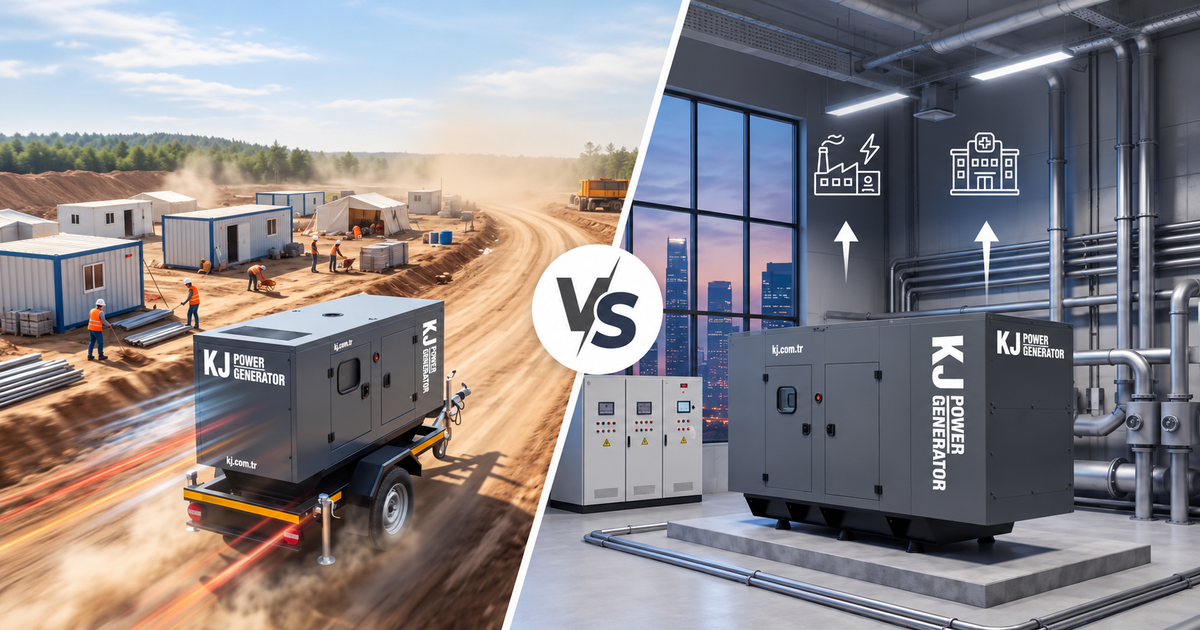
The continuity of industrial facilities, infrastructure projects, and commercial organizations depends on an uninterrupted power supply. When mains electricity is unavailable or when setting up a backup power system against potential outages, it is necessary to select the configuration best suited to the physical and technical requirements of the operation. In this process, the most fundamental strategic crossroad decision-makers face is choosing between a mobile generator or a stationary generator. The right system architecture directly impacts both operational efficiency and total cost of ownership. As KJ Power Generator, with our global engineering vision, we have prepared this technical guide to help you determine the most rational and effective energy solution for your projects.
Key Differences Between Mobile Generators and Stationary Generators
Examined from technical and logistical perspectives, the difference between mobile and stationary generators primarily manifests in the devices' mobility capabilities, chassis designs, and installation infrastructure. While stationary systems are designed to be permanently integrated into a specific location, portable systems possess a flexible structure capable of quickly adapting to changing field conditions. This structural difference shapes a wide operational spectrum—from generator installation site requirements and licensing processes to sound attenuation enclosures and connection mechanisms.
What is a Mobile Generator and Where is It Used?
Mobile Generator refers to industrial power systems integrated onto trailers, towed chassis, or specialized transport frames, offering maximum logistical flexibility. Key mobile generator application areas include geographical regions where the grid line has not yet reached, continuously relocating mobile field crews, and structures requiring periodic power. As KJ Power Generator, through our high-strength axle systems and mobile canopy designs compliant with rugged terrain conditions, we make energy portable to wherever it is needed.
What is a Stationary Generator and Which Needs Does It Suit?
A stationary generator is a permanent power solution architecture permanently connected to the infrastructure of a specific facility or building, automatically kicking in (via an ATS panel) during grid power outages. These units are engineered to meet high power requirements and serve at the same location for many years. Stationary industrial facilities, data centers, and integrated manufacturing hubs where uninterrupted power flow is critical stand out as the primary application areas for stationary generators.
Comparison of Mobile and Stationary Generators in Terms of Portability
In process management, generator portability directly determines the logistical speed of projects. Portable generator units can be dispatched to a different location within hours via towing vehicles without needing additional crane or heavy transport operations. In stationary generator systems, relocating requires extensive processes such as dismantling, heavy vehicle transport, concrete pad preparation at the new site, and rewiring. Therefore, portability is a critical selection criterion for companies with variable operational sites.
Which Generator is More Suitable in Terms of Power Capacity and Performance?
When generator power, fuel consumption, and overall generator performance are evaluated in line with engineering criteria, stationary units are seen to offer broader flexibility at the upper segment power limits. Industrial generator sets with very high kVA ratings must be positioned permanently due to weight and size constraints. However, as KJ Power Generator, through our compact design capabilities, we successfully apply high generator power capacity requirements to mobile chassis as well, offering high-performance mobile generator solutions to the service of the industry.
Mobile Generator Use in Construction Sites, Events, and Temporary Projects
For a construction site carrying out processes such as infrastructure, mining, or road construction, using a mobile generator allows the power source to move in parallel with the project's progress. Similarly, for open-air organizations or short-term events, mobile generator units create an unparalleled temporary energy solution due to their rapid deployment capability. These systems, which are also indispensable for rental fleets in the sector, align perfectly with generator searches requiring short-term generator usage for all temporary projects.
Stationary Generator Preference in Factories, Hospitals, and Businesses
When public health and industrial production are involved, there is zero tolerance for power outages. Selecting a stationary generator for a hospital is a legal and technical necessity for the safety of operating rooms and life support units. The same applies to investing in a stationary generator for a factory to prevent production line downtime or positioning a stationary generator for businesses to avoid financial losses. In such corporate structures, long-term generator usage and a highly reliable uninterrupted energy solution can only be validated through stationary systems.
Comparison in Terms of Installation, Maintenance, and Ease of Use
In stationary units, generator installation costs and engineering labor are higher due to ground load-bearing requirements, exhaust silencer lines, and architectural integration. Mobile units, being close to a "plug-and-play" concept, offer installation simplicity. Regarding maintenance processes, although similar engine architectures are used in both systems, the greater exposure of mobile units to outdoor conditions can influence generator service support intervals. As KJ Power Generator, we provide optimized generator maintenance cost processes through our global technical service network for both generator types.
Which is More Advantageous Cost-Wise: Mobile or Stationary Generators?
During financial analysis processes, alongside the initial purchase prices of generators, total costs including generator fuel consumption and operational expenses must be calculated. Mobile units may incur a higher initial CAPEX (Capital Expenditure) compared to stationary units of equivalent power due to sub-chassis and trailer costs. However, because they can be reused across different projects and offer ease of transfer between job sites, they significantly reduce the total cost of ownership in the long run for multi-location enterprises.
How to Select the Right Generator Type According to Your Needs?
An accurate industrial generator selection is only possible by correctly analyzing the geographical, logistical, and electrical parameters of the project. When selecting a generator based on needs and performing generator capacity sizing, a precise simulation must be conducted regarding the expected generator operating duration, frequency of use, and target locations. As KJ Power Generator, our primary mission is to engineer the system that will deliver the highest efficiency for your budget and operational structure by having our expert engineering staff analyze the dynamics of your facility or project on-site. You can contact us to design the right mobile or stationary power configuration for your business and receive professional support.


