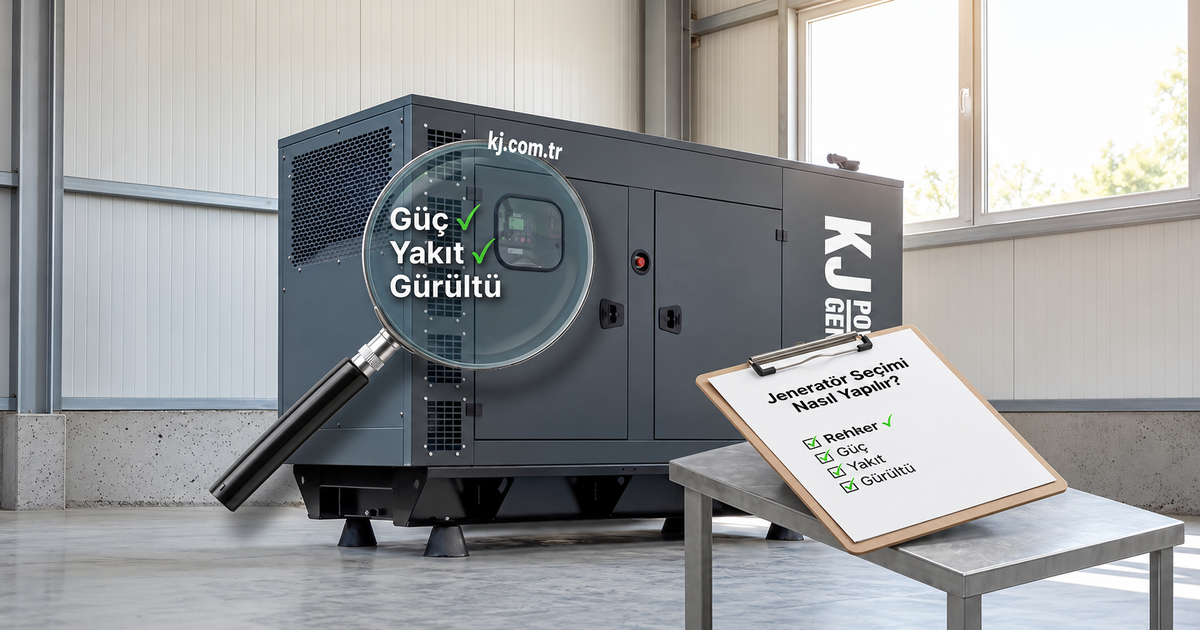
Ensuring the energy security of industrial facilities, commercial enterprises, and residential projects is the most fundamental condition for operational continuity. Developing technology, digitalized production lines, and grid fluctuations due to the global climate crisis have made investing in a backup power system a strategic necessity in 2026. However, choosing the right generator among hundreds of different models on the market requires evaluating technical, financial, and logistical parameters together. As KJ Power Generator, in line with our global engineering vision, we present this comprehensive 2026 generator purchasing guide to the sector, which will enable you to determine the most optimized uninterrupted power solution model for your business or residence.
What Should Be Considered When Choosing a Generator in 2026?
In today's engineering standards, what needs to be considered when purchasing a generator is not limited to the initial purchase price of the device. During the generator selection process; the climatic characteristics of the geographical location where the system will be installed (temperature, humidity, and altitude), the quality of the mains electricity, the current and future growth projections of the facility, and local environmental regulations (emission and noise regulations) must be analyzed as a whole. The basic answer to the question of what to consider when buying a generator is hidden in the balance of efficiency, reliability, and flexibility that the system will provide throughout its entire life cycle.
How to Determine the Right Generator Power for Your Needs?
An incorrect generator capacity selection leads to bottlenecks in operational processes or serious financial losses. When determining the actual generator power requirement of the facility, in addition to the nominal powers of all devices in the system, loads that draw high current at startup (inrush current) such as electric motors must also be taken into account. In generator capacity calculation processes, it should be clarified whether the system will operate in continuous (Prime), backup (Standby), or continuous power generation (Continuous) regimes, and the generator selection should be projected accordingly based on the need.
Why is the kVA Value Important in the Generator Purchasing Decision?
In electrical sizing, generator kVA calculation processes form the basis of the system architecture. At this stage, the difference between kVA and kW and power factor concepts must be analyzed correctly. While kVA represents the total apparent power the generator can produce, kW expresses the active part of this power that is converted into work. In addition, the phase structure of the system is critical; while single-phase generator (monophase) solutions are sufficient for small-scale commercial areas or residences, three-phase generator systems must definitely be positioned for industrial facilities and structures with heavy machinery. The answer to the question of how many kVA generators your business needs is clarified by the generator load calculation to be performed by our expert engineers.
How to Compare Diesel, Natural Gas, and Gasoline Generator Options?
Diesel Generator Selection: With its high torque capacity, rapid block load acceptance, and on-site fuel storage flexibility, it is the most reliable backup power system solution for industrial areas.
Natural Gas Generator Selection: Thanks to the uninterrupted pipeline supply, it eliminates the need for fuel storage, and with its low emission and continuous energy production, it is a structure fully compatible with special project solutions and cogeneration systems.
Gasoline Generator Selection: It is ideal for small businesses or home use where low kVA is required and the need for mobility stands out.
As KJ Power Generator, we design the most efficient engine configuration according to the fuel accessibility criteria of your project.
How to Choose a Generator for Home, Business, Institution, and Industrial Use?
The energy characteristics and expectations of each segment are different:
Generator Selection for Home: Low noise level, compact design, and minimum maintenance need are priorities.
Generator Selection for Workplace: Medium-scale and fast-engaging systems that will prevent data loss and commercial pauses during an outage should be preferred.
Generator Selection for Factory: Heavy-duty industrial generator selection rules that can handle high-ampere motors and harmonic loads must be applied.
Generator Selection for Construction Site: Mobile generator units with canopies resistant to harsh field conditions where there is no grid infrastructure stand out.
How Do Fuel Consumption and Efficiency Affect Generator Selection?
The total financial burden of a power system is determined by the total cost of ownership (TCO) rather than the initial purchase price. The biggest item of this cost is generator fuel consumption processes. Choosing a model equipped with new generation engine technologies and offering high generator efficiency provides significant fuel savings in operational processes. A fuel-efficient generator selection that fully matches the load profile of the facility optimizes the return on investment (ROI) time by minimizing generator operating cost items in the long run.
Why Are Automatic Transfer Panels and Additional Equipment Important?
In energy management systems, ensuring the continuity of the system without the need for human intervention during an outage is a critical parameter. Automatic generator systems work integrated with an automatic transfer switch (ATS) that detects when the mains electricity is cut off or the voltage drops below critical limits. While manual generator systems are dependent on human labor and time; automatic panels absorb the outage in seconds and transfer the energy to the field. In 2026 standards, additional equipment such as smart synchronization panels and remote monitoring modules are indispensable parts of corporate risk management.
How Are Noise Level, Canopy Structure, and Installation Area Evaluated?
The generator installation area where the generator will be positioned must be meticulously examined for both the lifespan of the device and environmental health. Especially in hospitals, schools, hotels, or dense residential areas, generator noise level is a critical concept. In these regions, silent generator models with muffler systems complying with international acoustic standards or canopy generator options with high sound insulation should be preferred. Having sufficient air intake and hot air discharge (radiator) circulation in the installation area is a mechanical necessity to prevent the engine from overheating.
Why is Service, Spare Parts, and Warranty Support Important in the Purchasing Process?
The quality of a generator is measured not only by its performance when it leaves the factory but also by the sustainability it offers during an emergency outage. Therefore, in the purchasing decision, the generator warranty period offered by the manufacturer, the global generator service support network, and uninterrupted generator spare part support competence should be the primary priority. A system that is not intervened with in time and does not have access to original parts leaves your business completely vulnerable to energy crises and indirectly disrupts the generator maintenance cost balance.
How to Make the Right Decision When Purchasing a Generator in 2026?
Making a successful energy infrastructure investment in 2026 requires an engineering-based and visionary perspective that goes beyond instant needs. Determining the correct system capacity, optimizing the fuel type, integrating digital control infrastructures, and choosing a strong service partner are the golden rules of this process. Our main mission as KJ Power Generator is to analyze all the electrical and logistical dynamics of your project or facility on-site with our expert engineering staff and to project the power configuration that best fits your budget and has the highest efficiency. You can contact us to secure the future of your business with uninterrupted energy in line with the principles of the 2026 generator purchasing guide and to benefit from our after-sales service advantages specific to your project.


