Our Oil Industry References
Explore the organizations and companies in the oil, refinery, and fuel sectors included in KJ Power Generator’s official reference list.




Our Products for the Oil Industry
KJ Power solutions for the high, variable, or off-grid energy needs of drilling, production, transfer, and processing sites.
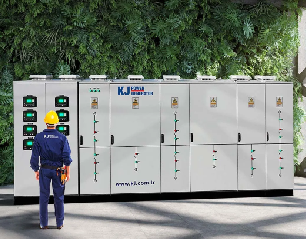
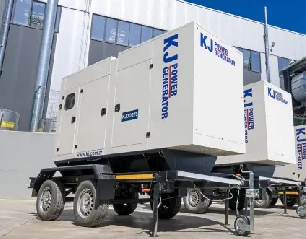
Power Management for Operational Continuity at Oil Fields
Energy infrastructure at oil fields supports drilling, production, pumping, measurement, communication, and safety systems together. The impact of a power outage can range from slowing production to bringing equipment to a safe stop. Therefore, rather than treating all consumers as a single group, power management should distinguish process-critical loads from equipment that can be shut down in a controlled manner. The facility's daily load profile, grid quality, shift schedules, maintenance intervals, and future capacity requirements should be analyzed. Whether generators will serve as the primary power source or as emergency backup must be determined from the outset, and the appropriate power rating and fuel autonomy selected accordingly. When energy management is planned in harmony with operating scenarios for site automation and distribution panels, operational continuity becomes more predictable. KJ Power Generator solutions may be considered in a project-specific technical assessment of these needs.
Uninterrupted Power Requirements at Drilling and Production Sites
At drilling and production sites, cranes, pumps, motors, control units, lighting, and communication equipment have different energy requirements. Large motors and periodic heavy loads during drilling can make selecting a generator solely on its nominal power rating insufficient. At sites without grid connections, the power source must be suitable for the planned operating duration, fuel replenishment must be sustainable, and maintenance access must be ensured. Acceptable transfer times for critical control and safety equipment must be assessed separately. A generator starting after grid failure does not in itself eliminate the momentary interruption; an appropriate UPS or another transfer solution may be evaluated for sensitive loads. The hazardous-area classification of the drilling site determines the placement of power equipment and the protective measures required. In this way, outage scenarios are aligned with the technical safety plan.
Power Solutions for Pump and Compressor Systems
Pumps and compressors used in oil production and transfer require special consideration when selecting power systems because of their high starting currents and varying mechanical loads. Motor rated power, starting method, service factor, process pressure, and other consumers that will start simultaneously must be examined together. Direct-on-line starting, soft starters, and variable-frequency drives can alter the transient electrical behavior encountered by the generator. Starting large motors in a controlled sequence can help limit voltage and frequency fluctuations, provided the sequence is compatible with process requirements. Harmonic effects and power factor should also be included in assessments of systems using variable-frequency drives. Fault and shutdown conditions at pumping stations must be assessed not only electrically but also with regard to mechanical and process safety. The appropriate generator configuration should be selected based on actual load data and manufacturer performance limits.
Backup Power Infrastructure at Refineries and Processing Facilities
At refineries and processing facilities, a power outage can simultaneously affect process control systems, auxiliary pumps, fire safety equipment, and various production units. Not every load in these facilities necessarily needs to continue operating on generator power; in some processes, completing a controlled and safe shutdown is the priority. Backup power architecture should therefore be defined together with the facility's process hazard analysis and business continuity objectives. Automatic transfer panels, uninterruptible power supplies, generators, and electrical distribution paths should be assessed as components of an integrated system rather than separately. The sensitivity of critical control devices to brief transfer times, the order in which the generator accepts loads, and fuel autonomy are important planning factors. In areas where explosive atmospheres may occur, standard generator equipment must not be assumed suitable for direct use; placement and equipment specifications must be verified against the relevant engineering and safety requirements.
Energy Continuity for Pipelines and Transfer Stations
Oil pipelines and transfer stations may consist of pumping, valve-control, measurement, and communication points spread over a large geographic area. A power outage at one point can affect not only local equipment but also the overall transfer schedule of the pipeline. Accordingly, main pumps, automated valve systems, remote monitoring units, control panels, and safety loads should be addressed as separate priority groups in the energy continuity plan. At remote stations, generator runtime, remote alarm transmission, fuel replenishment frequency, and the conditions under which maintenance teams can reach the site may be decisive. The restart sequence of motor-driven pumps and pressure conditions in the transfer pipeline should also be assessed alongside electrical load calculations. Where necessary, short-term uninterruptible power support for automation systems may be combined with generator backup for longer outages. This creates an energy scenario that supports the operating and safety requirements of the transfer infrastructure.
Independent Power Systems for Off-Grid Oil Fields
At oil fields without a grid connection, the generator system is often considered the primary energy source. In this case, it is important to choose a generator rating suitable for primary power use, plan capacity during faults or maintenance, and secure the fuel supply. Where operating points are far apart, cabling, distribution panels, voltage drop, and grounding conditions broaden the scope of the energy system. If daily load fluctuations are significant, the start-up sequence of multiple generators or battery-supported energy management in suitable projects may also be examined. However, the suitability of every energy source for site conditions and technical safety requirements must be verified. In areas with difficult access, remote monitoring, maintenance planning, and spare parts supply are important for operability. A successful power system depends not only on installing generators but also on planning them as part of long-term site operations.
Generator Systems for High Temperatures, Dust, and Harsh Site Conditions
Oil production areas may be exposed to high temperatures, dust, humidity, saline atmospheres, or difficult access conditions. These environmental factors can affect generator cooling capacity, air filtration, corrosion resistance, and available output power. The selected engine, alternator, and enclosure configuration should be compared with manufacturer data for site temperature and altitude. In dusty environments, air inlets and filters must be carefully assessed; at high temperatures, special attention should be paid to radiator and ventilation placement. An enclosure or container solution must provide environmental protection while maintaining sufficient cooling air and safe exhaust discharge. Appropriate area classification and placement conditions must also be considered where there is a risk of flammable gases or vapors. Durability comes not from a single enclosure feature but from the combination of suitable equipment selection, facility layout, maintenance procedures, and technical verification.
System Planning for Variable and High Power Demands
Energy demand at oil fields can vary considerably depending on production stages, the number of motors running, and transfer schedules. High power may be required when pump and compressor groups operate simultaneously, while on some shifts only control and auxiliary loads remain active. Generator systems should therefore be sized using representative low, normal, and high-load scenarios rather than a single peak-power figure. In suitable projects, parallel operation of multiple generators can help manage online capacity according to load demand. However, synchronization, load sharing, sudden motor starts, and the remaining capacity if one unit goes offline must be assessed together. The compatibility of prolonged low-load operation with the relevant engine's operating limits should also be checked. Design decisions must be based on verified technical data, site measurements, and necessary test scenarios.
KJ Power Generator and Energy Systems for Oil Projects
When evaluating KJ Power Generator systems for oil projects, the first step is to correctly define the facility's intended energy use and its list of critical loads. Drilling equipment, production pumps, compressors, refinery auxiliary systems, and remote transfer stations do not have the same power profile. Diesel generators, mobile generators, Twin generators, and synchronization solutions can be considered on a project-specific basis against these different requirements. A suitable solution requires evaluation of starting loads, operating duration, planned redundancy, site temperature and dust levels, fuel replenishment, and maintenance access. How the control system and distribution infrastructure will interface with facility automation must also be clarified. At sites with hazardous-area classifications, equipment location and necessary safety conditions must be verified by qualified project specialists. Technical collaboration with KJ Power should aim to establish a practical power system plan that matches generator capacity to the facility's actual operational and safety needs.
Power System Applications in the Oil Industry
Power system planning at oil fields should jointly consider drilling and production loads, pumping, refinery auxiliary operations, site safety, redundancy, and grid access.
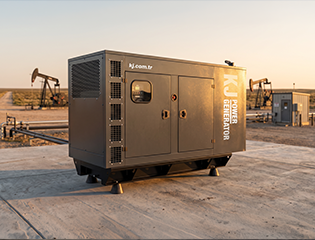
Power system planning for drilling loads, site motors, and production equipment, tailored to operating patterns and outage scenarios.
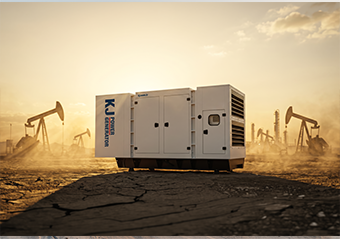
Motor starting, variable loads, staged commissioning, and the energy requirements of control systems are assessed together.
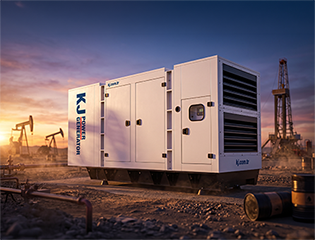
Backup power systems are designed for critical process auxiliary loads, controlled shutdown, and power transfer scenarios.
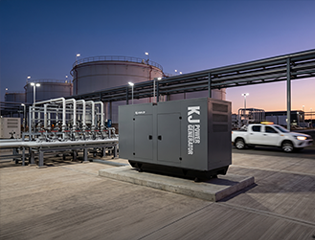
Power solutions are assessed for facilities with limited grid access in line with fuel, maintenance, and redundancy requirements.


