Our Finance and Banking References
Explore the financial and banking institutions included among KJ Power Generator’s references in Türkiye and other countries.











Our Products for Finance and Banking
KJ Power solutions for backup power, noise control and system redundancy in branches, administrative headquarters and critical financial infrastructure.

Power Assurance for Business Continuity in Finance and Banking
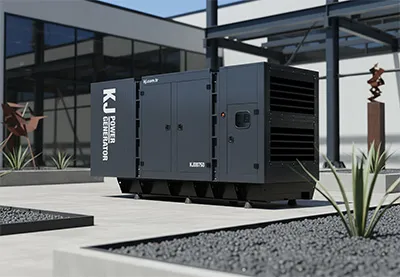
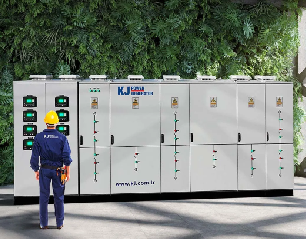
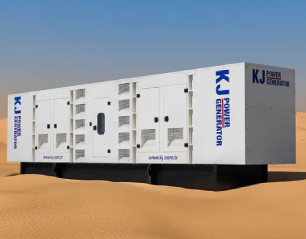
In financial and banking institutions, power continuity is important for processing customer transactions, enabling employees to work, maintaining communication networks and protecting security systems. A grid outage can affect not only lighting but also transaction terminals, access control, network equipment and building support systems. For this reason, business continuity plans must clearly define which functions will continue operating during an outage. Suitable UPS infrastructure can be considered to protect critical electronic loads during instantaneous transfers, while generator systems support the designated loads when an outage is prolonged. Outage duration, transfer arrangements, fuel autonomy, maintenance conditions and testing procedures must be considered together. The objective is not merely to have a generator, but to plan for the entire power supply chain to function under the outage scenarios accepted by the institution.
Backup Power Solutions for Bank Branches and Headquarters
The power requirements of bank branches are not the same as the load profiles of headquarters and operations centers. Transaction counters, security infrastructure, network connections, ATM areas and basic air conditioning may be priorities at branches, while large headquarters buildings can include more extensive IT, mechanical services and common-area loads. When selecting a backup power system, the critical load list, simultaneous consumption, initial starting currents and services that must continue during an outage should be identified. Diesel generator capacity is assessed not solely on total installed power, but according to the sequence in which loads will be connected and their actual electrical characteristics. The transfer scenario between the transfer panel, UPS and generator must be designed in advance; installation space, fuel replenishment and service access must also be examined within the project. This allows a backup power architecture appropriate to financial buildings of various sizes.
Uninterrupted Power for ATMs and Self-Service Banking Locations
At ATMs and self-service banking locations, a power outage can affect withdrawals and deposits, device communications, camera systems and remote monitoring functions. The type of power solution depends on whether the ATM is in a standalone kiosk, an area connected to a branch or a shared service point containing several machines. Suitable UPS capacity may be considered to allow the device to operate in a controlled manner or shut down safely during brief grid interruptions. For longer outages, a shared power supply infrastructure supported by a generator may be planned depending on the site conditions. It should not be assumed that a generator is suitable for every individual ATM; actual device power requirements, space limitations, noise, fuel and maintenance possibilities must be examined separately. The main aim is to manage energy-related risks to self-service operations in accordance with operating conditions.
Power Continuity for Critical Financial Transactions
Money transfers, payment approvals, transaction records and financial data processing depend on application servers, communication components and data storage systems operating together. A loss of power in these systems may delay transactions or interrupt access to services. In the design of power continuity, the relevant teams must identify which transactions and systems are critical, the acceptable interruption time and the requirements for restarting. UPS infrastructure can be considered for short interruptions and transfers to generator power, while the generator provides longer-term backup power; it does not guarantee zero interruption on its own. Single points of failure in electrical distribution, UPS-generator compatibility, voltage and frequency behavior, and alarms received from monitoring systems must be examined as part of the project. Regular testing and maintenance scenarios are important for verifying the designed power supply chain under operating conditions.
Reliable Power Systems for Payment and Communication Infrastructure
Financial institutions' payment and communication infrastructure includes branch networks, communication devices, transaction routing systems and associated technical facilities. Because these components are distributed across different locations, a one-size-fits-all approach to power planning is limited. Suitable short-term power support can be provided for modems, routers, security devices and local systems, while generator supply can be considered for higher-capacity technical areas. In addition to identifying critical loads, the design should address their supply through separate electrical circuits, transfer arrangements and remote status monitoring capabilities. Supplying power to one location does not mean that the entire communication chain will function; connected service providers and other infrastructure dependencies must also be assessed. A reliable power system requires a coordinated approach covering both equipment and operating procedures.
Low-Noise Generator Solutions Suitable for Urban Locations
Bank branches and financial centers are often located in densely built-up urban areas with substantial pedestrian activity. In such locations, generator selection must consider not only power capacity but also noise, exhaust routing, fresh air supply, maintenance access and neighboring occupied areas. Soundproof generator enclosures, together with appropriate acoustic measures, can help reduce noise emitted into the surroundings. However, enclosure selection must not restrict air inlet and outlet areas or compromise cooling performance. Installation options such as basements, courtyards, rooftops or the vicinity of the building must be assessed individually in terms of fire safety, vibration and applicable local regulations. The target sound level, measurement point and operating conditions should be defined at the beginning of the project, and results verified against the technical data of the selected equipment.
Redundancy and Synchronization Requirements in Financial Institutions
Redundancy with multiple generators may be planned for headquarters, central operations facilities or financial buildings with a high concentration of critical loads. This assessment is guided by normal system demand, the capacity to be maintained if one unit is taken out of service and the objective of maintaining service during maintenance. With suitable infrastructure, synchronization systems support parallel generator operation and load sharing between units. However, adding a generator does not automatically create an uninterrupted and fault-tolerant system. Potential single points of failure, including shared panels, fuel lines, control systems and transfer equipment, must also be examined. Load prioritization, staged connection, failure scenarios and return-to-normal procedures should be defined in advance. The right solution depends not on the number of units, but on the targeted availability and how the entire system works together.
Scalable Power System Planning for Different Locations
Branches, regional offices, service buildings and central operations areas of financial and banking institutions may have different power requirements. In a multi-site organization, scalable planning begins by classifying facilities according to their use, critical load levels, grid quality and installation conditions. Defining standardized technical requirements for locations with similar profiles can promote consistency in maintenance and operations. However, using the same generator capacity at every location may not produce appropriate results; regional climate conditions, noise limits and fuel access also influence selection. If new branch openings, capacity growth or technological changes are anticipated, future system expansion should be evaluated. Remote monitoring, periodic testing schedules and service access plans should also be treated as part of the overall operational approach.
KJ Power’s Engineering Approach to Finance and Banking Projects
The scope of a generator solution for finance and banking projects should be defined with reference to an institution's critical activities and the facility's existing electrical infrastructure. Technical evaluation with KJ Power Generator may be based on inputs such as load lists, operating scenarios, expected operating duration, available installation space and noise criteria. Diesel generator, soundproof enclosure, control and synchronization system options are examined together according to the project's actual needs. Particularly in existing buildings, it is important to clarify interfaces such as transfer panel connections, UPS compatibility, ventilation, exhaust and service access. Defining documentation, testing and acceptance criteria from the outset makes it easier for different parties to work toward the same technical objective. The aim of the engineering approach is not merely to select the appropriate power rating, but to create a verifiable power system aligned with the operational needs of the financial institution.
Power System Applications for Finance and Banking
Power requirements for financial institutions must be planned by evaluating location, critical transaction infrastructure, ATM placement, load profile, noise conditions and redundancy objectives together.
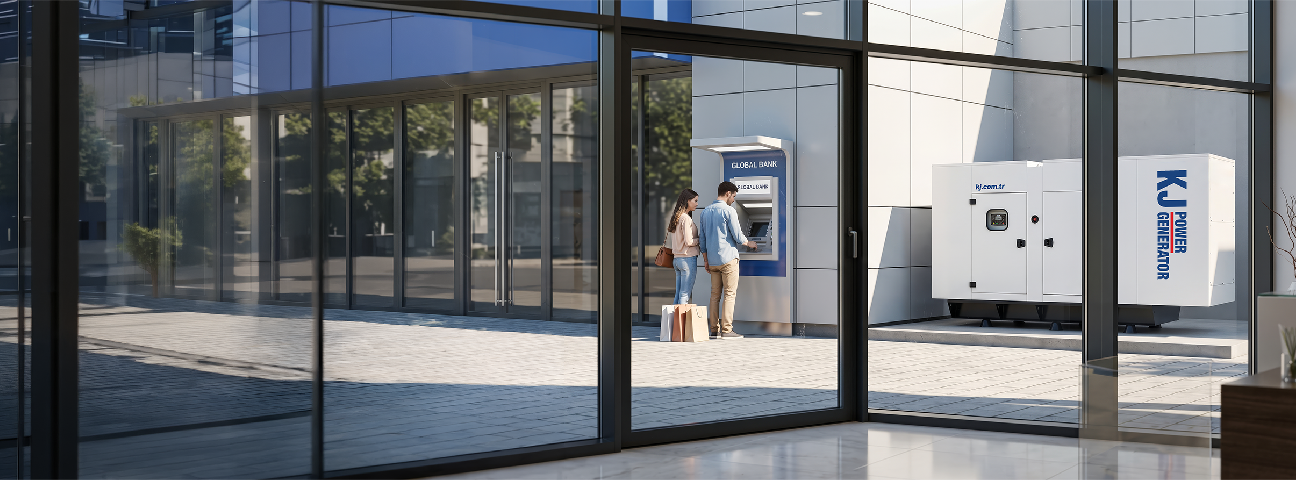
Backup power is planned for transaction areas, security systems, critical office equipment and supporting building services in branches and headquarters.
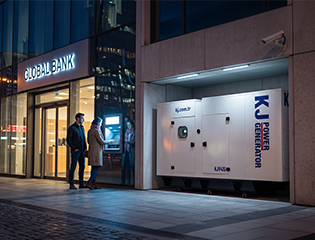
UPS, communication infrastructure and backup power support where appropriate are assessed together for ATM areas and self-service banking points.

Power continuity for financial transaction and data infrastructure is planned through UPS, generators, power distribution and controlled transfer scenarios.
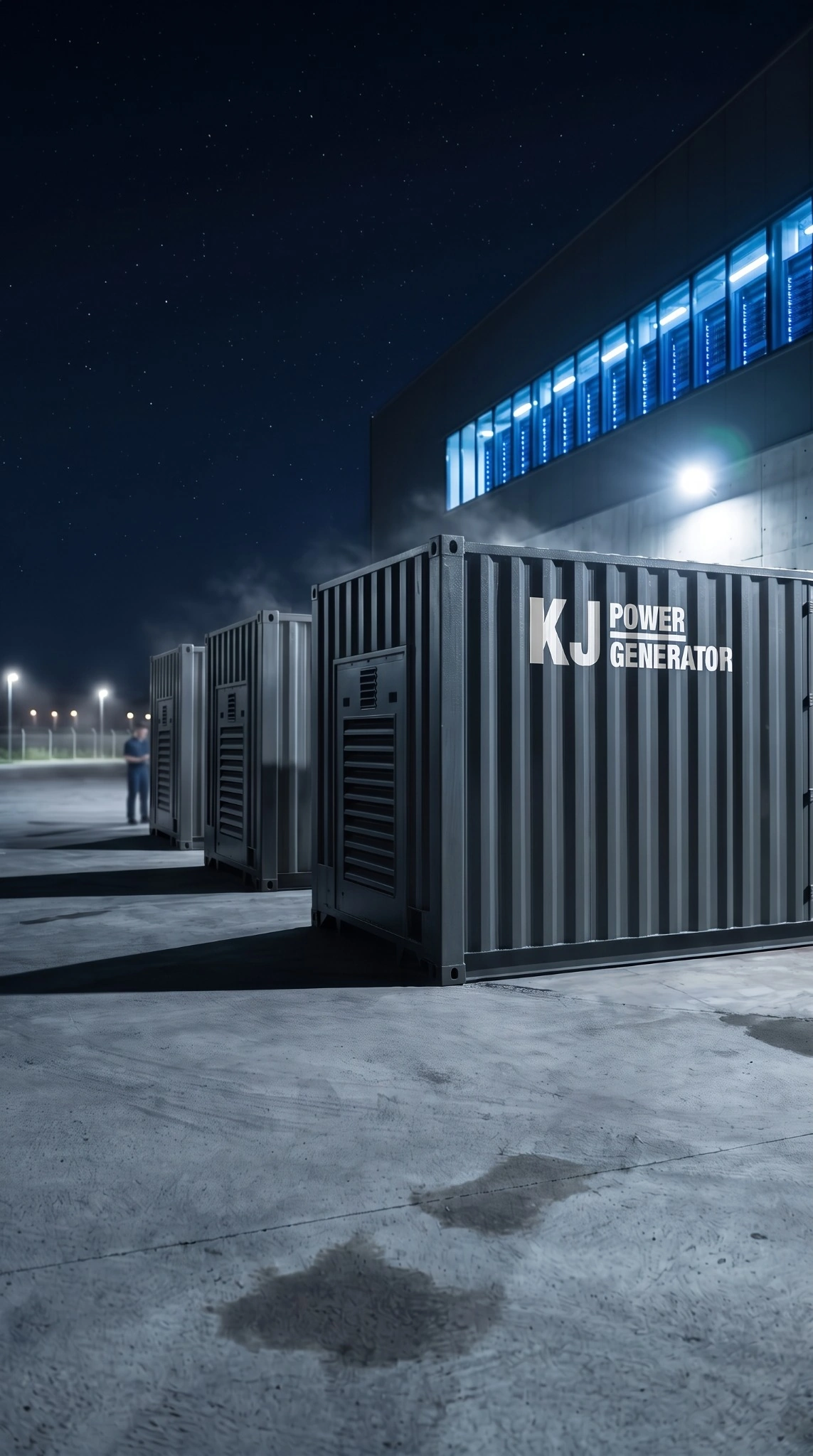
In large financial facilities, parallel operation of multiple generators, load sharing and preservation of available capacity in the event of a failure are evaluated.


