Our Aviation References
You can explore the organizations listed under the Aviation sector filter on KJ Power Generator’s official references page.





Our Products for the Aviation Industry
KJ Power solutions for backing up terminal and airport support loads, parallel operation, power management and generator enclosures suited to installation requirements.

Uninterrupted Power Infrastructure for Airport Operations
Airport electrical infrastructure supports flight operations, terminal functions, airside lighting and security systems together. Since utility outages affect these areas differently, power planning should classify loads by function and interruption tolerance rather than treating them as a single group. Appropriate uninterruptible power supplies manage the transfer interval for critical control and communication equipment, while generators are considered for supplying designated loads during longer outages. Electrical distribution, automatic transfer, fuel infrastructure, maintenance access and potential failure scenarios should be addressed in one integrated system plan. Operational objectives, applicable technical regulations and actual facility load data form the starting point for design. The goal is therefore not merely to install adequate generator capacity but to establish a verifiable power continuity architecture.
Power Continuity for Runway, Apron and Taxiway Systems
Lighting and guidance infrastructure on runways, aprons and taxiways must receive reliable power in accordance with the airport’s defined operating scenarios. Runway and taxiway lights, airside control systems, field distribution panels and associated automation equipment may have different electrical characteristics. Generator sizing must therefore assess initial energization conditions, transfer times and automatic control logic as well as continuous demand. Where uninterrupted transfer is required, suitable UPS or other interim power arrangements must be considered alongside generators. Cable lengths, voltage drop, grounding and alternative supply paths influence the project design. The airport’s operating and safety requirements must clearly establish which parts of the lighting system must remain operational during an outage.
Backup Power Solutions for Critical Systems in Terminal Buildings
Terminal buildings distribute electricity across various systems, including HVAC, escalators, elevators, passenger information displays, checkpoints and IT infrastructure. Not every project requires all terminal loads to be supplied simultaneously during an outage; a critical load list should identify priority services and security functions that must continue. Generator sizing considers motor starting behavior, simultaneous demand, power factor and operating duration. The transfer requirements of sensitive electronic systems are assessed separately through the UPS infrastructure. Variations in passenger volumes can change load profiles, so backup power planning should not rely solely on total installed capacity. Identifying interdependencies among equipment in advance enables more consistent operating decisions during outage scenarios.
Reliable Power for Air Traffic Control and Communication Systems
Air traffic control and communication infrastructure may contain critical systems sensitive even to brief power interruptions. The power requirements of control towers, radio communications, data links, monitoring equipment and associated auxiliary systems must be determined individually according to their functions and priorities. Generators can provide supply during prolonged outages, but loads requiring instantaneous continuity need suitable UPS and independent power arrangements. Designing a redundant power architecture requires examining shared distribution points, single points of failure, availability during maintenance and automatic transfer logic. Planned scenarios must comply with the relevant aviation authority requirements and the facility’s technical procedures. The presence of a generator alone does not guarantee uninterrupted communications; the entire power chain must be verified.
Power Solutions for Baggage Systems and Ground Services
Baggage conveyors and sorting lines, conveyor motors, screening equipment and technical systems supporting ground services operate on different duty cycles. Motor loads starting together during peak hours can create temporary power demand above normal consumption. Generator selection should therefore assess starting currents, frequency and voltage response, and staged load starting in addition to operating power ratings. The energy requirements of sensitive control systems, such as baggage tracking and automation, are evaluated separately from mechanical conveyor lines. Power distribution distances and operational mobility also matter in ground service buildings and temporary work areas. An appropriate backup scenario identifies potential operational bottlenecks rather than giving all equipment identical priority. This enables the energy infrastructure to support baggage flows and ground services at the specified operating level.
Managing Power Requirements in Hangars and Maintenance Facilities
Power requirements in aircraft maintenance hangars, workshops and technical service areas vary with the equipment used and the nature of maintenance activities. High-bay lighting, ventilation, heating, compressors, lifting equipment and electric hand tools create different load profiles. Generator capacity assessments should distinguish normal operating demand from simultaneous motor starting events. Backup supply architecture can be designed by defining priority functions that must remain available during hangar maintenance. Exhaust discharge, ventilation, fuel safety, noise and generator location must be evaluated in the context of building conditions. Outdoor enclosed generator systems or mobile power options for specific tasks may also be considered where needed. The objective is to translate equipment selection into an energy plan aligned with actual maintenance schedules and the facility’s technical constraints.
Backup Power for Emergency Lighting and Security Systems
Emergency lighting, fire detection, access control, camera systems and designated security infrastructure are priorities during airport power outages. However, the acceptable interruption time for each system is determined by its own technical specification and applicable regulations. UPS units, battery-backed luminaires, automatic transfer switches and generators may perform different roles in the backup power plan. Generator startup time and short-term backup capacity must be considered together. Electrical distribution and protective device selectivity should also be assessed so that a failure in one area does not affect other critical zones. Post-installation scenario testing, maintenance procedures and regular inspections are necessary to preserve power continuity throughout operation. The objective is to ensure appropriate support for security functions under planned outage conditions.
Power Systems Supporting Operational Continuity During Peak Passenger Traffic
During holidays and peak flight hours, changing passenger demand can alter terminal HVAC, lighting, baggage and auxiliary service loads. At the same time, continuity requirements in different airport areas may remain unchanged. The backup power system should not be selected solely on the basis of the highest consumption figure. Low, normal and peak load scenarios, simultaneous operation of critical loads and planned capacity increases should all be assessed. In projects using multiple generators, synchronization and load sharing may help manage capacity under suitable operating conditions. Unit failures, maintenance periods and load priorities must nevertheless be addressed in separate scenarios. A clearly defined redundancy strategy supports predictable airport operations at different traffic levels.
KJ Power’s Engineering Approach to Airport Power Infrastructure
KJ Power Generator’s engineering approach to airport projects should begin by assessing energy requirements against actual facility loads and outage scenarios. Terminals, runway lighting, hangars and air traffic support systems do not share identical backup needs. The project review covers generator capacity range, load pickup sequence, automatic transfer, synchronization, location, noise, fuel autonomy and maintenance access. Integration boundaries with UPS and related systems must be clearly defined for critical control and communication loads. KJ Power’s diesel generators, Twin generators, synchronization systems and enclosures may be considered as options, with suitability verified against each facility’s technical data. Reviewing planned load transfers and failure scenarios during factory and site acceptance tests is an important step in the transition from design to operation.
Power System Applications in the Aviation Industry
Airport power infrastructure should be planned by jointly considering critical load priorities, redundancy, power quality and future capacity requirements across runway, apron, terminal, control and maintenance areas.
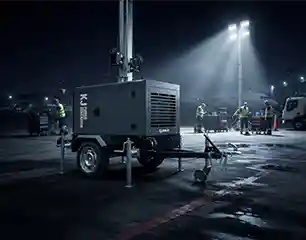
Transfer times and alternative power supply paths are planned together for runway and taxiway lights, field distribution and control circuits.

Prioritized outage scenarios are developed for passenger information, HVAC, baggage handling and building service loads.

Dependencies between UPS systems, generators and electrical distribution are assessed for sensitive control and communication equipment.

Appropriate power planning accounts for changing load requirements of workshops, compressors, ventilation and maintenance equipment.


